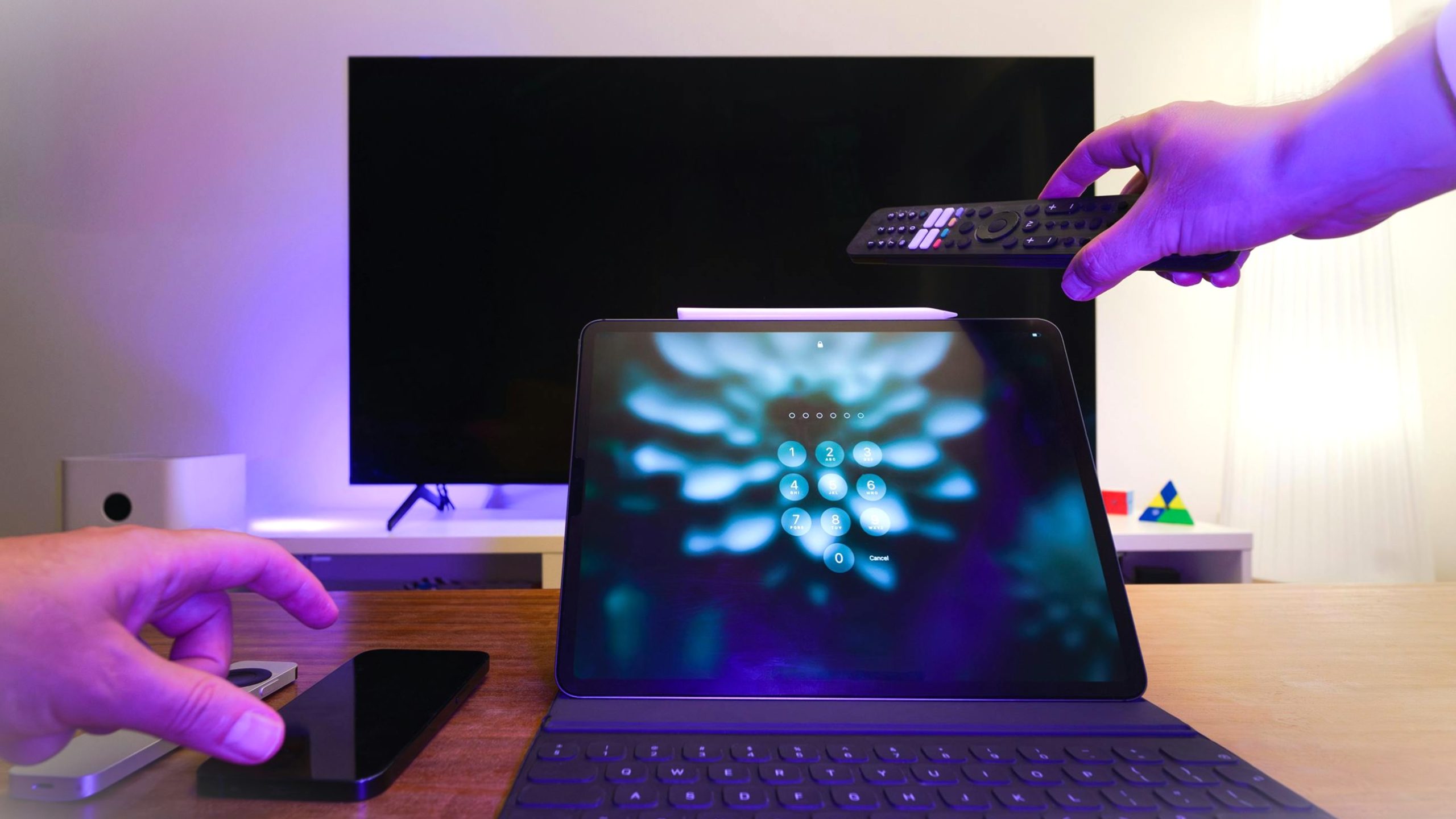
Scroll, getting sprinkled, consume – without any activity. Whether social media, streaming or constant news feeds: passive consumption has become a constant companion of our everyday lives. But what actually happens in our brain? How does passive consumerism affect our mental health – and why do we often feel so tired, overstimulated or even empty, even though we were “just lying on the sofa”?
What is passive consumption?
Passive consumption means that we absorb information or content without becoming active ourselves. This means that we:
- watch series or videos in an endless loop
- scroll through social media feeds without a goal
- listen to podcasts or news for hours without consciously listening
- let content run “on the side” – while we eat, work, sleep
The crucial point: We don’t react, we don’t think deeper, we don’t shape anything ourselves. Our brain is active – but in a kind of idle state.
This is what passive consumption does to your brain
Our brain is designed to process, evaluate and link things. If we consume passively over the long term, these processes get out of balance:
1. Sensory overload
Constant stimuli activate our nervous system – even when we have the feeling that we are only consuming “relaxed”. This can:
- lead to inner restlessness
- Permanently irritate the stress axis (cortisol)
- Affect sleep quality and concentration (1)
2. Loss of self-regulation
Those who regularly slip into passive consumption patterns forget how to actively decide what is good for them.
3. Decreased creativity
When the brain is constantly busy with ready-made content, there is little room for your own ideas, imagination and creativity.
Mood lows & listlessness
In the long term, passive consumption can promote depressive moods because we often “fill up” without experiencing real emotional added value. The feeling of having “lost” time can lead to feelings of guilt or frustration.
What you can do: Consume consciously instead of letting it sprinkle
It ‘s not about demonizing media or entertainment. Rather, the key is: mindful and active interaction. Here are a few simple impulses:
Before turning it on, ask yourself the question:
“Why do I want to watch / listen / scroll this now?” Is it for relaxation, for information, for inspiration – or out of boredom?
Plan conscious consumption times:
Better to enjoy 30 minutes of targeted enjoyment than 3 hours of aimless swiping.
Regularly switch from consumer to designer:
- Instead of a series: Paint, write, craft something
- Instead of scrolling: Have a conscious conversation or take a walk
- Instead of continuous sound: Enduring 10 minutes of real silence
Establish digital detox times:
An hour a day without any input – and instead just perceive what’s there. For many, this is challenging at first – but healing.
Quality instead of quantity
Passive consumption is convenient – but also mentally stressful in the long term (2). If we let it become a habit without reflection, we risk losing sight of ourselves and our needs. But with a little mindfulness, small conscious decisions and a return to actively shaping our time, we not only regain clarity and energy – but also the good feeling of arriving back at ourselves.
- Van der Schuur, W. A., Baumgartner, S. E., Sumter, S. R. & Valkenburg, P. M. (2015). The consequences of media multitasking for youth: A review. Computers in Human Behavior, 53, 204–215. https://doi.org/10.1016/j.chb.2015.06.035
- Shin, M., Downes, C., Hopwood, J., Byers, M. & Kemps, E. (2024). Media multitasking, negative mood, and avoidance coping. Behaviour And Information Technology, 1–11. https://doi.org/10.1080/0144929x.2024.2353276