
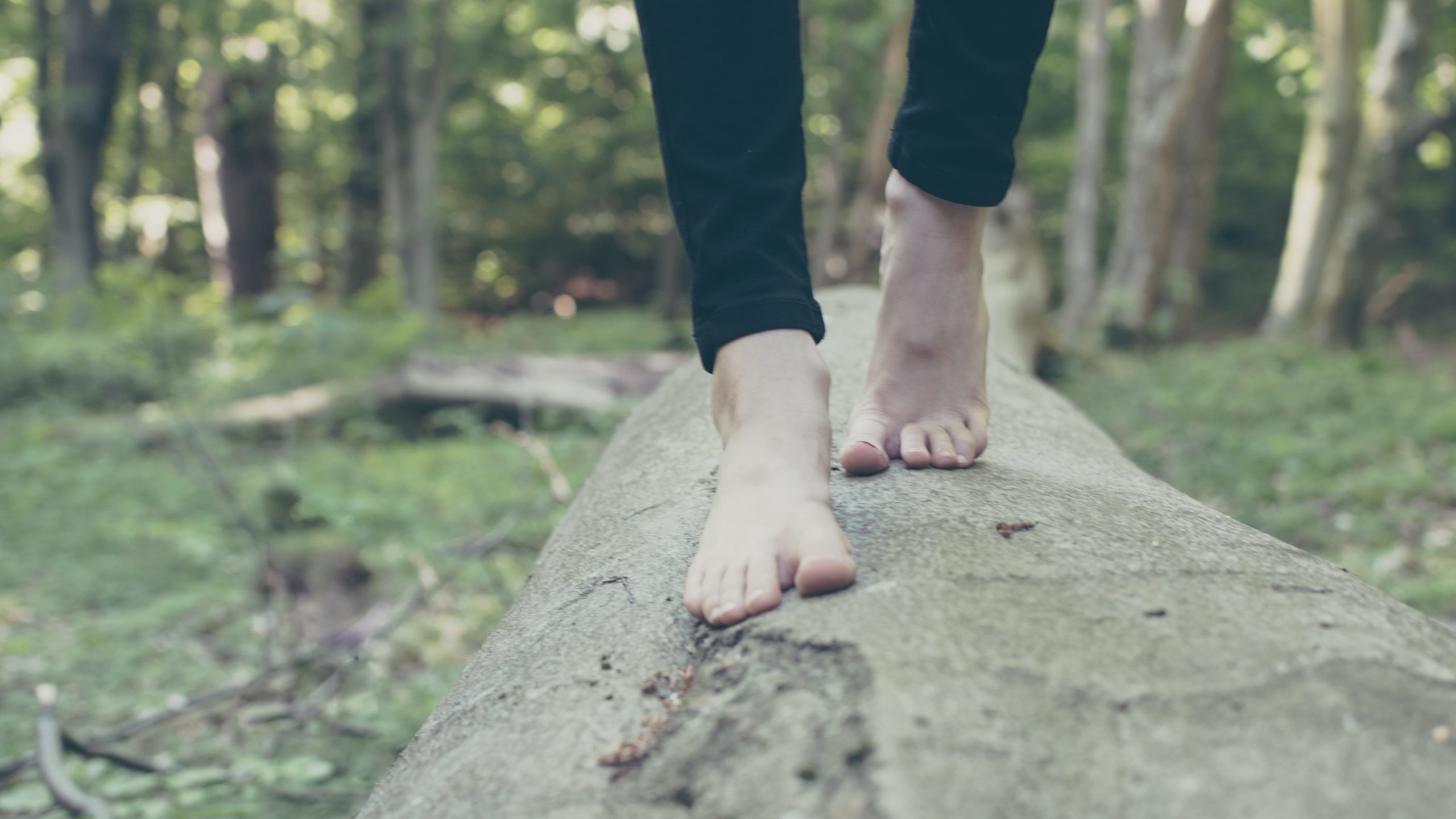
Our feet: They ensure that we stand securely and firmly in life and they carry us wherever we want to go. They are an important part of our health and if they are not doing well, it can affect our entire body. Yet they often don’t get enough attention. In this post, you’ll learn more about what your feet are capable of and how you can pamper them a bit.
Anatomy of our feet
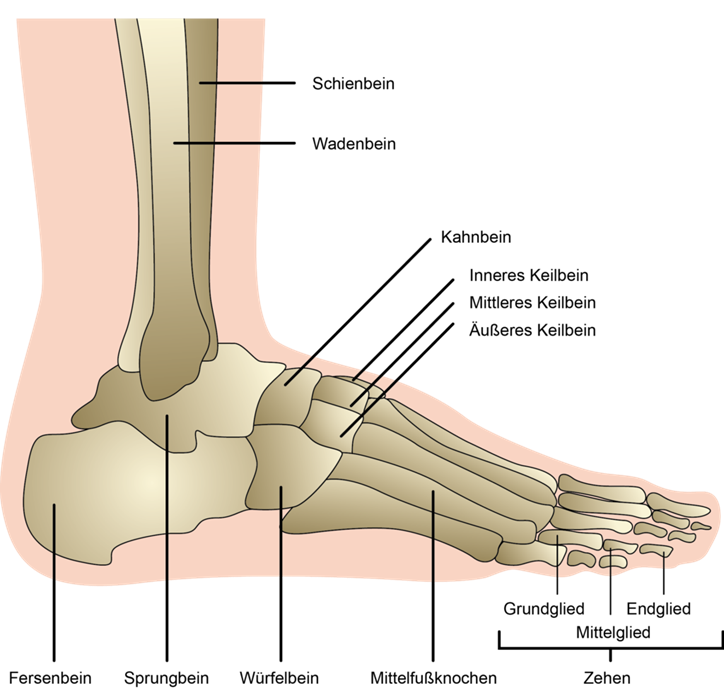
Our foot is connected to our lower leg by two ankle joints. One ankle joint is responsible for the steady heel-to-toe motion of the foot and the other for an accurate adaptation to uneven grounds. The latter is also facilitated by the toes. Between the ball of the foot and the heel, our foot forms a slight arch made up by several bones, such that shocks can be better absorbed.
Our foot consists of a total of 26 bones and can be roughly divided into three different areas: The tarsus, the metatarsus, and the forefoot. In addition, our feet each have two sesamoid bones. These are small bones built into tendons, which act as spacers between the bones. In the tarsal region are the talus, calcaneus, navicular, and cuboid bones. In the metatarsus are the metatarsal bones, which make up this entire area and extend to the proximal phalanges of the toes. In the forefoot sit the toes. While the big toe consists of only two phalanges, the other four toes have a proximal, middle, and distal phalanx.
Interaction of the feet with our body and mind
Our feet contribute a lot to our physical and mental health. Not without reason goes the saying that someone walks “light-footed through the world” when they are doing well, or that their “shoe pinches” when there are problems. Practitioners of the so-called reflexology are not only aware of this contribution of the feet but go as far as to say that our feet represent a mirror of our entire body. According to them, the human body with all its organs and systems is represented entirely in the reflex zones of the feet, only in a reduced version. By performing a special treatment of these reflex zones and pressure points, a wide variety of ailments, such as neck pain, back pain, or headaches, but also fatigue, stomach problems, or psychological issues can be alleviated.
In reflexology, the human body is understood as one unit in which all levels are interconnected. Hence, the feet form a map of the body in a way, as there is a reflex point for each part. Roughly, we can say that:
- Our toes represent the head, neck, and shoulder.
- Our metatarsus represents the chest and upper abdomen.
- Our ankles and heels represent the lower abdomen and pelvis.
- And the insides of our feet represent the spine.
Foot pain
Pain in the feet can occur for various reasons. For example, due to circulatory problems or inflammation (in this case, a doctor should be consulted), due to long periods of standing or running, or because of wearing the wrong shoes. Shoes that are too tight or too stiff, as well as high heels, strain our feet if worn over a long period of time and can damage them in the long term. Moreover, tensions due to coldness or adoption of wrong foot positions can also cause pain – usually showing in the evening or at night.
Since our feet are so closely connected to our entire organism, it quickly affects the rest of our body if they are not doing well. Typical consequences are tensions in the neck and shoulder area, as well as head and back aches. That is why it is important to treat your feet to a little wellness every now and then. Here are two relaxation options that are guaranteed to pamper your feet a little bit:
A nourishing foot bath
With a warm, nourishing foot bath, you stimulate the circulation in your feet. In this way, you can relieve pain and cramps, as well as ease tensions. Ideally, you should bathe your feet in at least ankle-deep water for 20 to 30 minutes. In the pleasantly, warm bathing water, you can add salts, herbs, milk, or soothing oils, such as mint, rosemary, or peppermint oil.
Foot massage with a fascia ball
As almost everywhere in your body, there are also fasciae in your feet. These organ tissues, which have their own pain receptors and transmit information (pain, movement) directly to our brain, are located, for example, in the tendons, joint capsules, ligaments, and muscles of our feet. Fasciae are responsible for ensuring that our tissue structures can glide smoothly past each other. However, due to one-sided stress, poor posture, or lack of exercise, fasciae can harden or stick together, which can lead to tension. For this reason, it is important to loosen and massage them through regular exercises, for example with a fascia ball. Here’s how:
Sit relaxed, with your back straight on a chair, and take care that you have a firm footing on the floor with both your feet. Now, slowly roll over the ball with the soles of your feet, from front to back. In between, you can also make circular movements with the ball. You can leave your socks on or take them off. Repeat these exercises a few times until you notice that the soles of your feet feel loose and relaxed. You can also use a fascia ball while standing. Simply stand upright, cross your arms in front of your chest, and place the ball under your foot.