
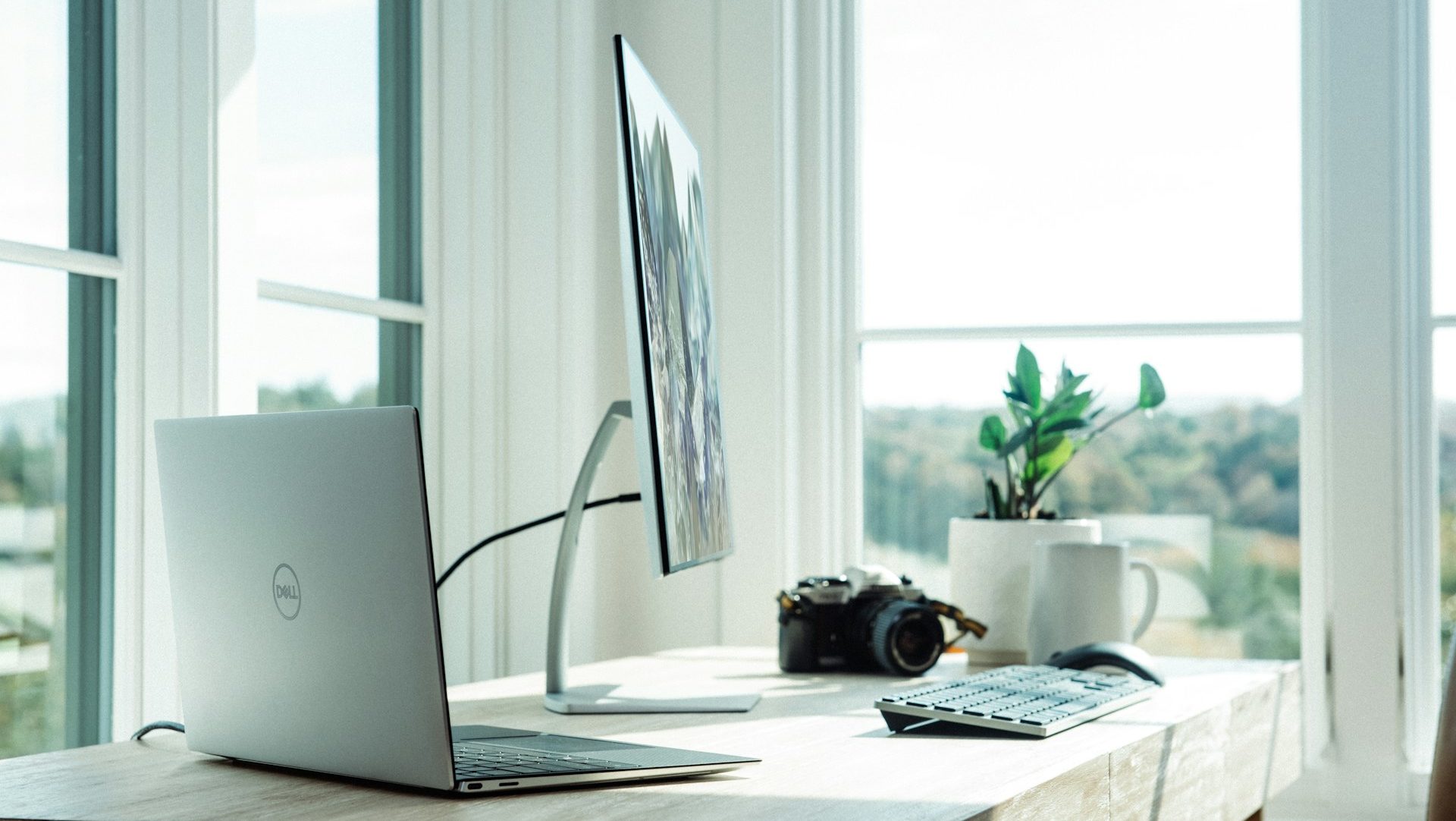
Do you work from home a lot and have a well-established set-up for your home office? Or do you find it challenging to work from home because you get distracted more quickly or have difficulty separating your personal and professional lives? If the latter applies to you, you probably prefer working in the office. But sometimes, external circumstances such as Covid-19 measures or family commitments may make it necessary to work from home for some time. For this case, you’ll find some basic tips on how to best deal with home office challenges and create a comfortable work environment in this post.
Designing the workplace
To successfully dedicate yourself to your work at home, you should create a pleasant working environment. The following tips will help you set up and design your workspace.
Defining the place of work
Creating a separate workspace prevents distractions and physically separates work from your personal life. Therefore, if possible, use a different room, a particular table, or at least a selected seat at the table. You must use this place exclusively for work because then you can better relax after leaving the workplace and won’t be reminded of work.
Keeping the workplace tidy
Remove all items from your workspace that you don’t need for your work. This will help you concentrate better and reduce distractions. Also, put your personal cell phone in another room and remove unopened mail and other to-dos that may tempt you to procrastinate. An exception to this rule are plants, as they reduce stress and improve air quality.
Using ergonomic work equipment
Ergonomic work equipment can help you improve your physical and mental health while continuing to achieve good work results. This includes, for example, a suitable desk, office chair, and monitor. It’s best to contact your manager and ask them to provide you with the equipment you need.
Ventilating regularly
To keep the air in your room fresh, you should make sure to ventilate at regular intervals. This will provide your body with enough oxygen, enabling you to concentrate on your work. If you have no or few windows, you should try to create a draft in the apartment. A fan can help, for example. Also, let in as much daylight as possible. It’s best to sit sideways to the windows to avoid glare. Use lamps that simulate daylight or use your breaks to go for walks.
Planning the workday
To stay motivated and focused throughout the day, it’s crucial to have a clear structure. The following tips will help you separate work and private life and organize your daily routine.
Determining working hours
If you set precise working hours and stick to them, it will be easier for you to relax after work. Communicate these times to your team (so you’re not bothered with work in your free time) as well as your family and friends (so you can work in peace). In addition, fixed routines in the morning as well as in the evening can help to separate work from free time. For example, you can take a short walk in the morning or drink your tea by the open window before you start working. You can then end your workday by cleaning up your workspace or listening to some music.
Using triggers
External signals help the brain to recognize the start and end of a workday. Separating the work area from the rest of your home (see above) is a good option to achieve this. In addition, you can put on your work clothes or turn on a particular lamp only for work. You can then start your free time by changing your clothes and turning off the lamp.
Taking breaks
Make sure to take small breaks regularly. This ensures that your brain remains efficient throughout the day and that you can concentrate better. For example, every 90 minutes, try to stretch your legs, close your eyes, or do a short relaxation exercise. Use your lunch break to eat and, if possible, get some fresh air. Avoid screens on your break, as they prevent you from getting the rest you need. Alternatively, arrange a virtual lunch or coffee break with colleagues.
Staying in motion
Holding video or conference calls while walking is a great way to incorporate more exercise into your workday. Informal meetings in particular can be ideal for this. It’s best to discuss this with your team beforehand – maybe you can try it out together?
Learning from experience
See what works best for you. For example, you can observe when you’re most focused and schedule important tasks at those times. You can also try out which meals you find most digestible at what time of day and whether you work better with or without music. Over time, you’ll find a routine that works for you.
With a well-designed workspace, clear routines, and regular breaks, you can successfully overcome many of the common challenges of working from home. Try out these tips and find the habits and conditions that work best for you.
You can find additional information here:
Bundesanstalt für Arbeitsschutz und Arbeitsmedizin. (o. J.). Mobiles Arbeiten: Arbeitsorganisation. https://www.baua.de/DE/Themen/Arbeitsgestaltung/Arbeitsorganisation/Ortsflexibles-Arbeiten/Arbeitsorganisation
Deutsche Gesetzliche Unfallversicherung (DGUV). (o. J.). Check-Up Homeoffice: Kurzversion [PDF]. https://publikationen.dguv.de/widgets/pdf/download/article/4019
European Agency for Safety and Health at Work. (o. J.). Remote and hybrid work [Information sheet]. https://osha.europa.eu/sites/default/files/documents/Remote_Hybrid_work-infosheet-EN.pdf