
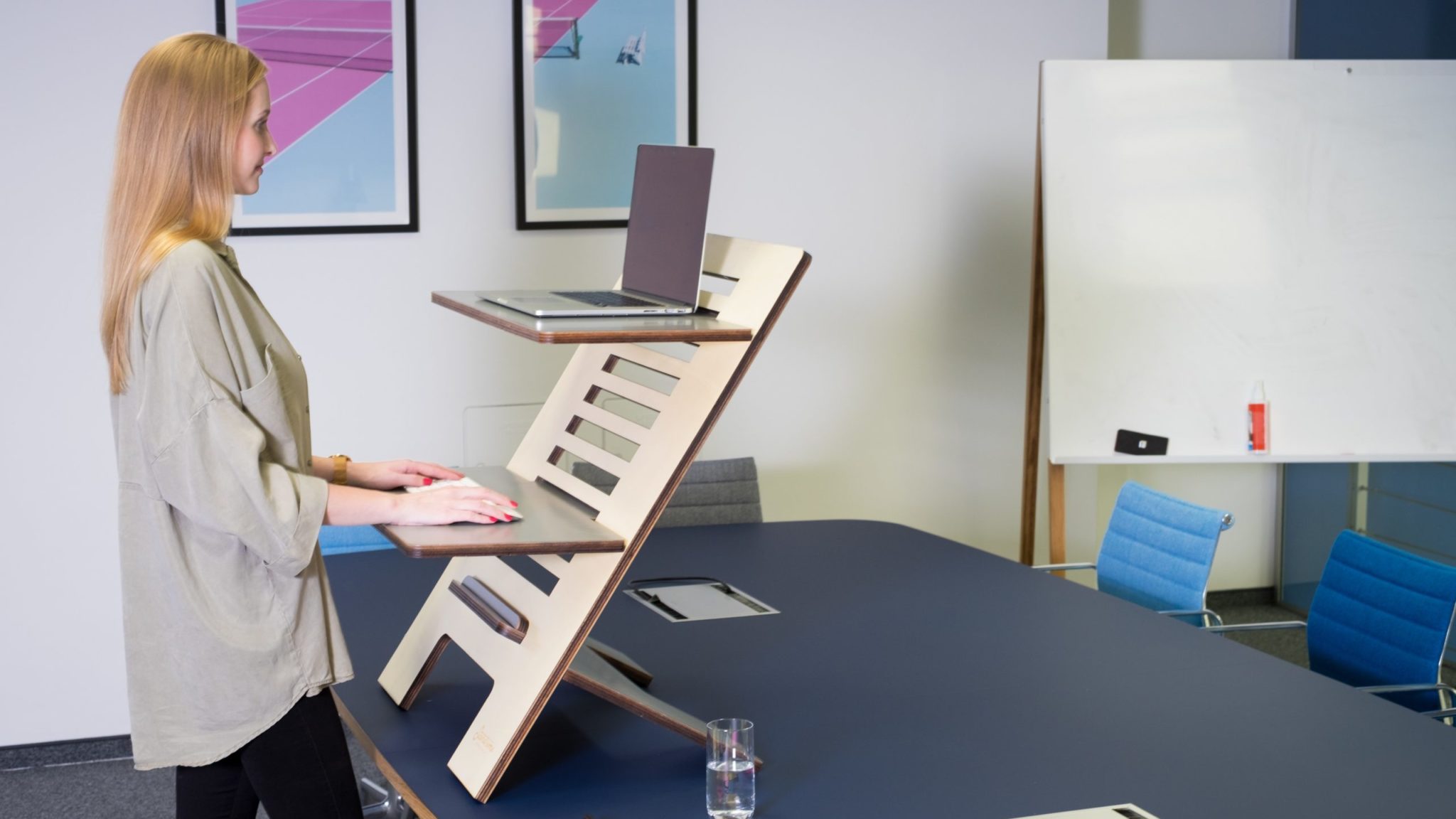
In our everyday lives, we spend a lot of time standing, sitting or lying down. Finding the right posture is not that easy. Incorrect posture puts a strain on our muscles and ligaments and leads to pain. Around 80% of people in Germany have suffered from back pain at least once in their lives. In this article we will look at the topic of standing. But how do you stand correctly and what mistakes should you avoid?
HOW OUR SPINE IS BUILT
The spine is an important part of our postural and musculoskeletal system. It keeps the body upright and carries the weight of the head, trunk and arms. With its natural double-S curvature, it enables us to walk upright, maintains our balance and absorbs shocks during movements. With a total of 33 vertebrae, it is divided into the cervical, thoracic and lumbar spine as well as the sacral and coccygeal vertebrae. The elastic intervertebral discs are located between the bony vertebrae. These ensure the mobility of the spinal column in all directions. The vertebral bodies attached to the spinal column together form the spinal canal for the spinal cord. In total, our spine is supported by around 150 muscles.
CORRECT POSTURE WHEN STANDING
When standing correctly, the feet are hip-width apart or in a crotch position and the knees are slightly bent. The back is straight and the upper body upright, the shoulders are relaxed and in line with the upper body. The head should be upright and the gaze directed forward. The slight tightening of the abdominal muscles counteracts a hollow back. In this position the spine is optimally in its natural double-S curve. But dynamics also play an important role in a back-friendly posture when standing. Our intervertebral discs need sufficient movement to maintain their elasticity and resilience. Between static standing, movement units are important. Even slight movements, such as alternating between a parallel stance and a step position, shaking out the legs or circling the shoulders, bring dynamism into the static posture and counteract fatigue and tension in the muscles.
CAUSES AND CONSEQUENCES OF A SLOUCHED POSTURE
Poor posture leads to tension, pain and shortening of the muscles. A frequently curved posture restricts the range of motion of the spine and makes it increasingly difficult for the body to regain its natural posture. The increasing tension in the neck changes the position of the head. By shifting the centre of gravity forward, three times the weight of your head rests on your spine, causing headaches and back pain, for example. But hyperextension of the spine can also lead to pain and hardening of the muscles, especially in the lower back. Long-term incorrect strain puts stress on the facet joints and leads to changes in the bone structure and wear and tear of the intervertebral discs. Tingling or numbness in the legs can be signs of this.
TIPS FOR EVERYDAY LIFE
When standing, make sure that your posture is correct for your body. Even small exercises that can be integrated into everyday life can help to balance out static standing.
1 Bring dynamic into the static posture
Shift your weight from one leg to the other and tilt your pelvis back and forth. Stretch your neck by pulling your chin to your chest and your body by bringing your arms up and stretching. Circling the shoulders and head loosens the muscles. If possible, take a few steps and shake out your legs.
2 Stregthening the back and abdominal muscles
By doing specific exercise for your back and abdomen, you can stregthen your muscles and improve your postures. For example, watch videos with exercises to do at home or get advice at the gym.
3 Check your posture
The posture of your body while standing is good to look at in a mirror. Develop a sense of correct posture and check it regularly in the mirror or ask people around you.