
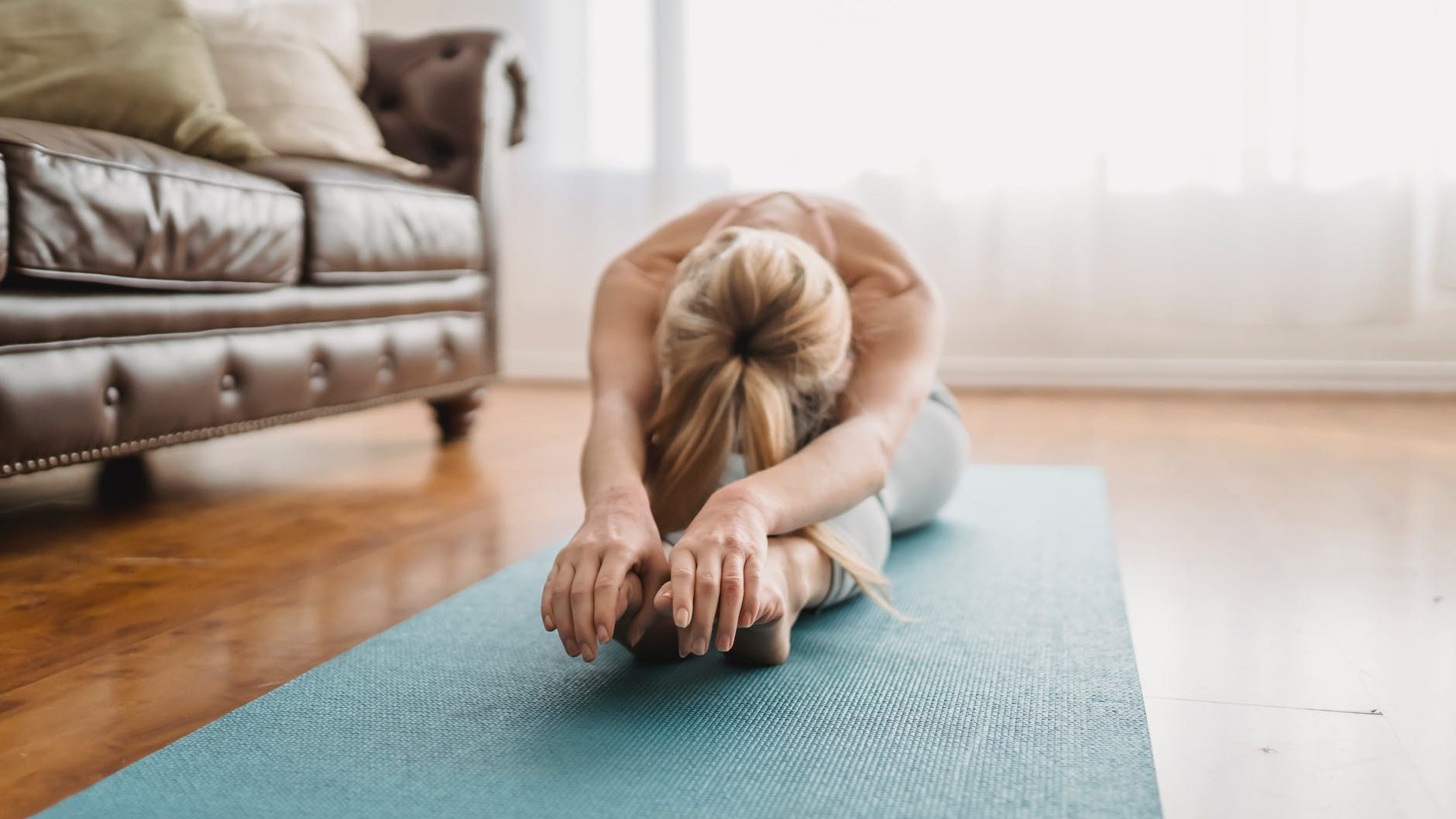
In addition to yoga, Pilates has also become an increasingly trendy sport in recent years. Although these two forms of movement have some similarities, they are very different from each other in many ways. But what is actually behind the term Pilates and where does it actually come from? Which principles are in the foreground and how does it affect our body and mind?
What is Pilates?
Pilates is a holistic and multi-layered full-body workout that offers numerous benefits for body and fitness. Breathing and movement as well as body and mind are brought into harmony. The concentrated and controlled execution of movements is always in the foreground. The activation of the so-called powerhouse by the tension of the deep abdominal, back and pelvic floor muscles is central. Pilates is considered a rather gentle workout without overloading joints and muscles. Nevertheless, the deep-seated abdominal muscles are sometimes very heavily stressed, which makes the training particularly effective. Basically, the guiding principle in Pilates is “quality instead of quantity” – so it’s not about doing as many exercises as possible. Instead, fewer exercises should be carried out, but with full attention.
Origin of Pilates
The origin of today’s Pilates goes back to Joseph Hubert Pilates, born in Mönchengladbach in 1883. Pilates was an active athlete who practiced various sports during his childhood, including gymnastics, boxing and yoga. Inspired by different influences, he developed a new form of holistic physical training during his captivity in England. This is how the forerunner of today’s Pilates was born, which he called Contrology at the time. The name goes back to the coordination and control of body and mind as central aspects of this form of movement. He developed all the exercises with the aim of helping his fellow prisoners to regenerate. Since the training was very successful, Pilates later opened his first Pilates studio in New York. From there, the new sport spread all over the world. Today, Pilates is also very popular outside the USA and enjoys an ever-increasing number of practitioners.
Six principles of Pilates
Pilates comprises six principles. These are crucial for the correct execution of the exercises:
- Centering: Pilates assumes that every movement originates from the center of the body. This is called in the Pilates Powerhouse and is approximately in the area of the navel.
- Breathing: The harmony of movement and breathing is very important in Pilates. The conscious breathing into the abdomen contributes to relaxation, which in turn helps in the execution of the exercises. The conscious breathing into the abdomen relaxes and thus helps with the exercises.
- Control: Controlling your own body is at the heart of every Pilates session. Similar to gymnastics or dancing, all movements are performed with absolute body control.
- Concentration / Attention: In order to achieve complete control of mind and body, absolute concentration is the essence of this training method. By paying full attention to the training, it is also easier to switch off and forget about the outside world.
- Movement precision: In Pilates, the precision of the exercise execution is very important. For this reason, the exercises are performed slowly and repeated only a few times.
- Flow of movement: Similar to dance, Pilates is characterized by smooth movements. The transition between the individual exercises is smooth.
The effect of Pilates
Pilates is a systematic whole-body workout. The focus is on improving strength endurance, coordination and mobility. By focusing on the powerhouse, the deep muscles of the body center in particular are stabilized and strengthened. The stability of the center of the body leads to the fact that the spine is straightened. As a result, Pilates also helps to relieve back pain as well as other discomfort in the back area. Through conscious concentration on the body and breathing, body awareness and coordination are also trained. Another benefit of Pilates is the stress reduction that comes from improving overall well-being.